work
object- project
- Object 49-1
- category
- object
- design
- 정종보, 최문규, 염인아
Context & Question
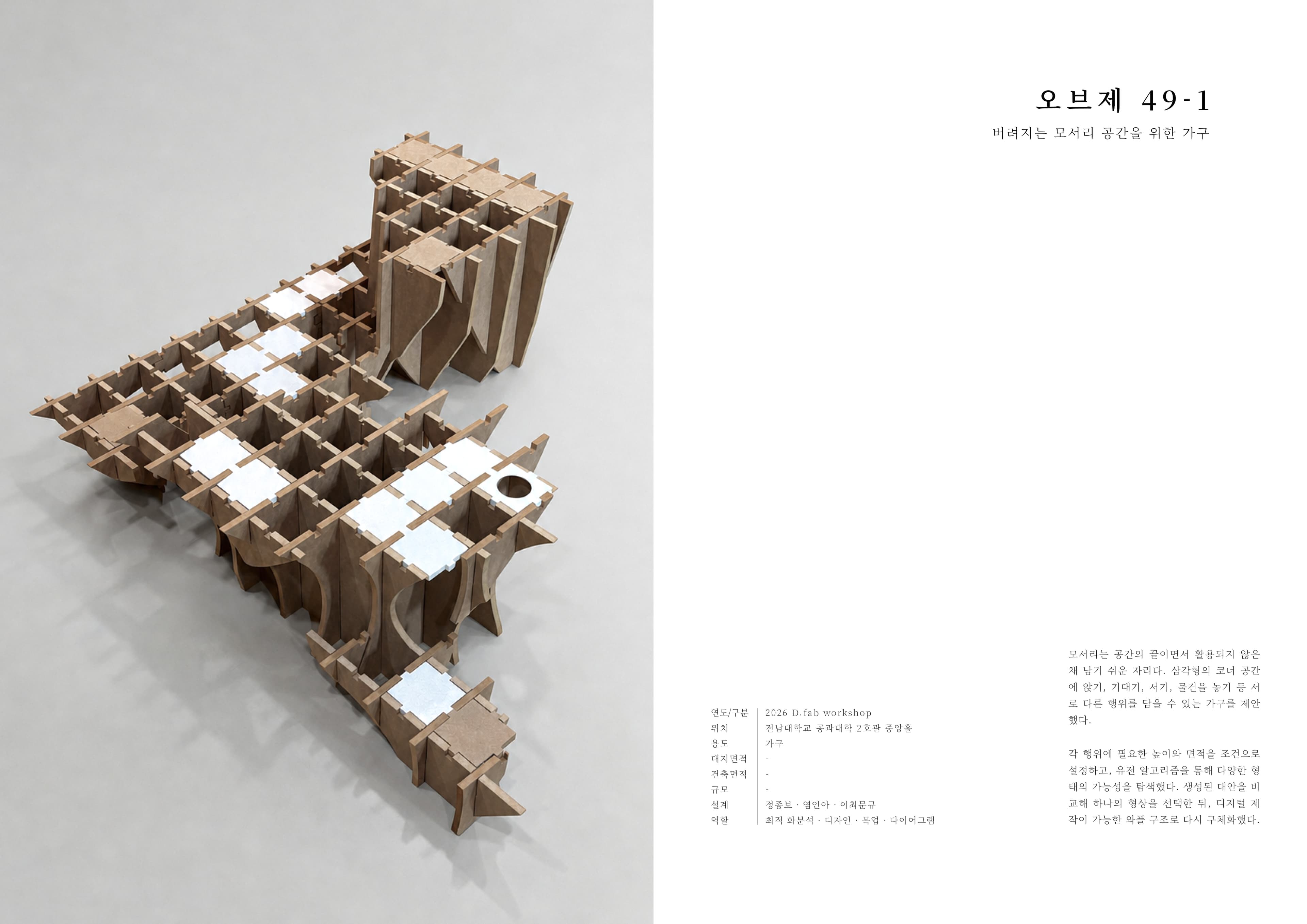
Architectural space contains not only places with clearly assigned functions but also small spaces that go unused.
The corner where two walls meet, in particular, defines the edge of a space yet is often left as a spot difficult to put to real use in daily life.
Object 49-1 began by looking at this corner not as mere surplus space but as a place where multiple actions could overlap.
Within this small space, the project tested how far a single piece of furniture could accommodate the range of postures and behaviors of its users.
Observation & Interpretation
The way people use furniture is not defined by sitting alone.
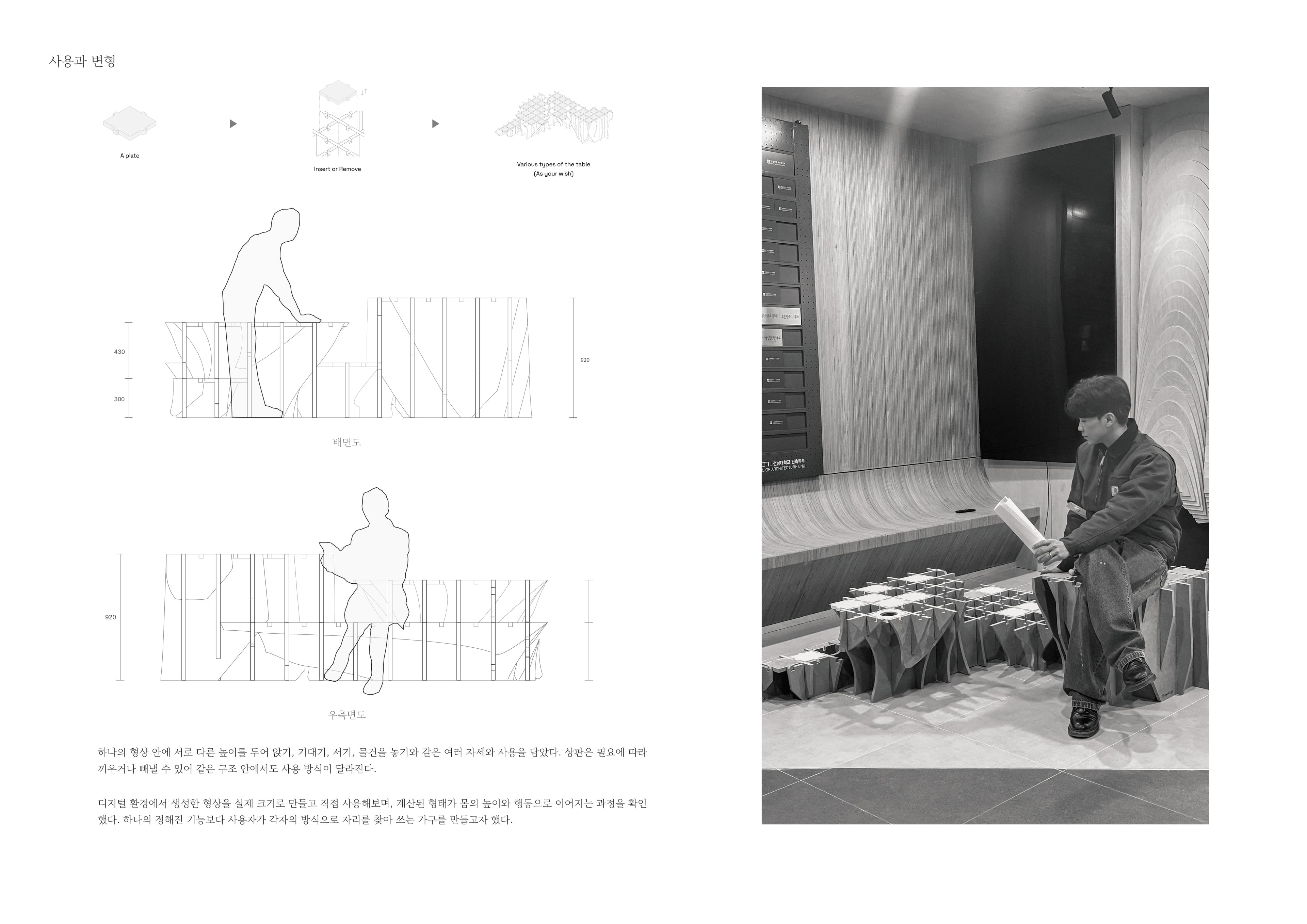
Leaning, standing, perching briefly, or setting an object down—multiple postures and actions occur simultaneously around a single piece.
Rather than designing furniture with one fixed use, the project sought a form that could simultaneously satisfy the height, area, and postural conditions demanded by several different actions—treating the corner's limited space as a design condition and exploring the forms possible within it.
Design Strategy
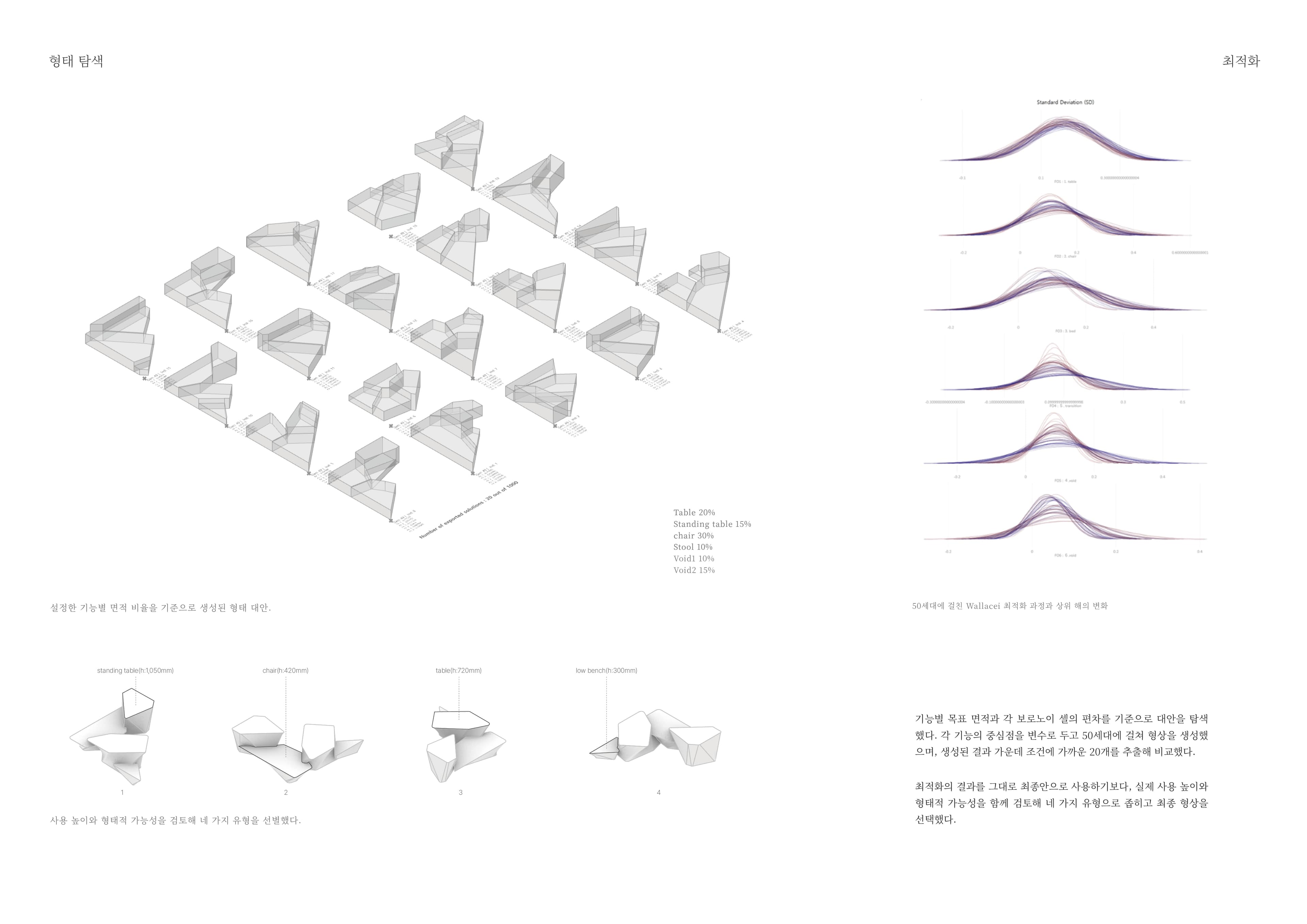
The height and area required for actions such as sitting, leaning, standing, and placing objects were quantified and set as design conditions.
Grasshopper and a genetic algorithm were then used to generate and compare a range of forms satisfying these differing conditions.
Rather than adopting the computed result as is, one alternative was selected after reviewing actual usability, form, and constructability together.
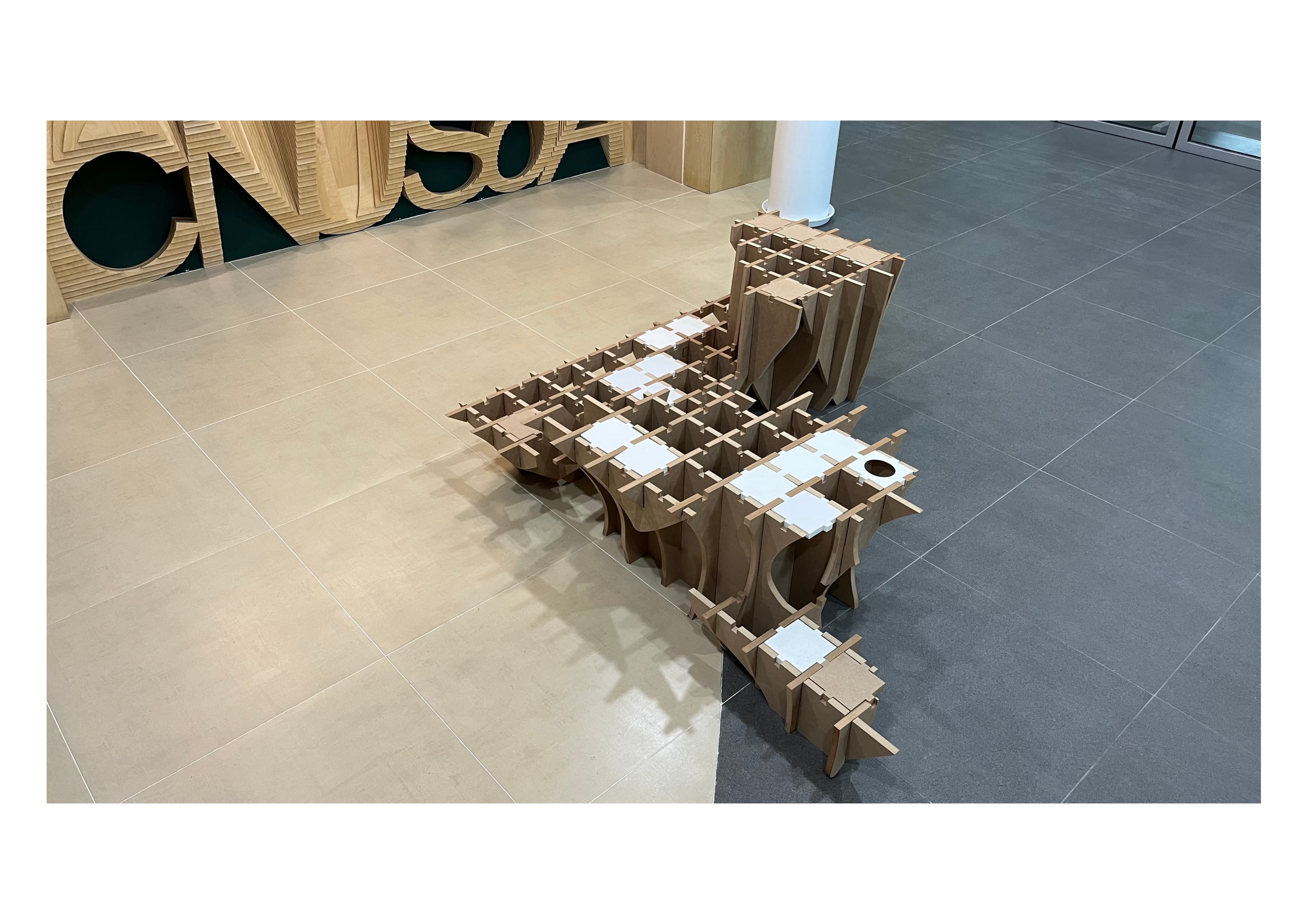
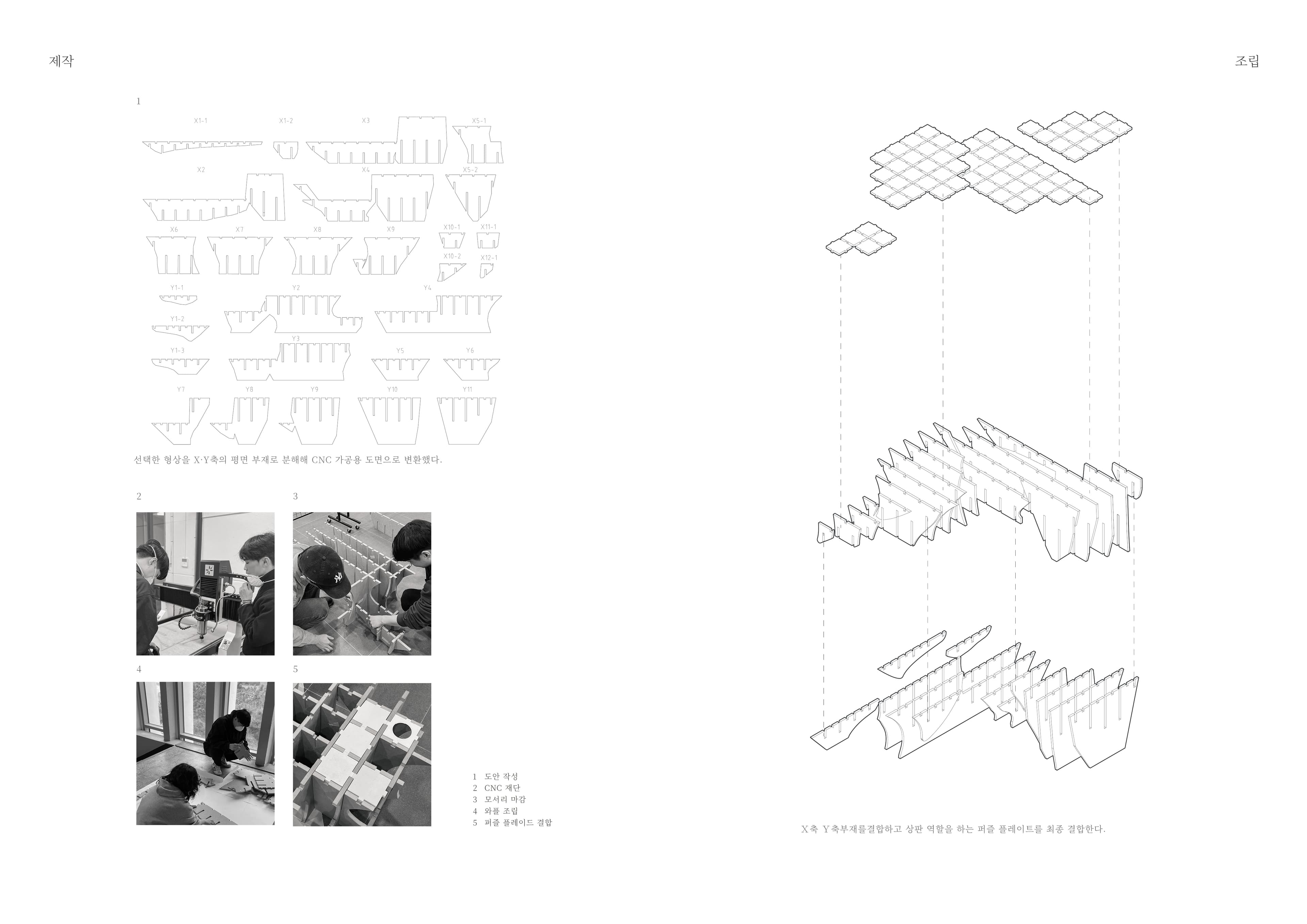
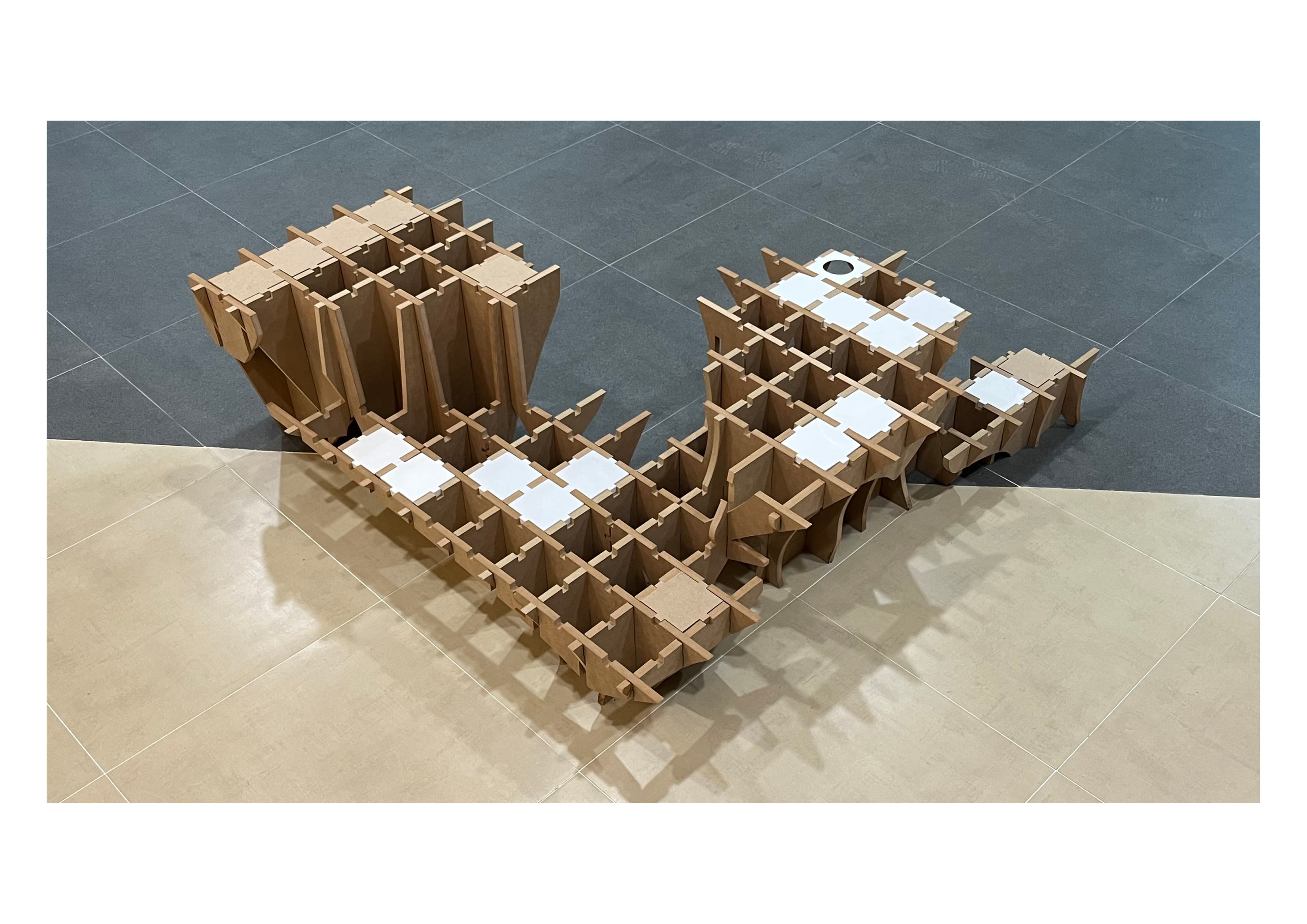
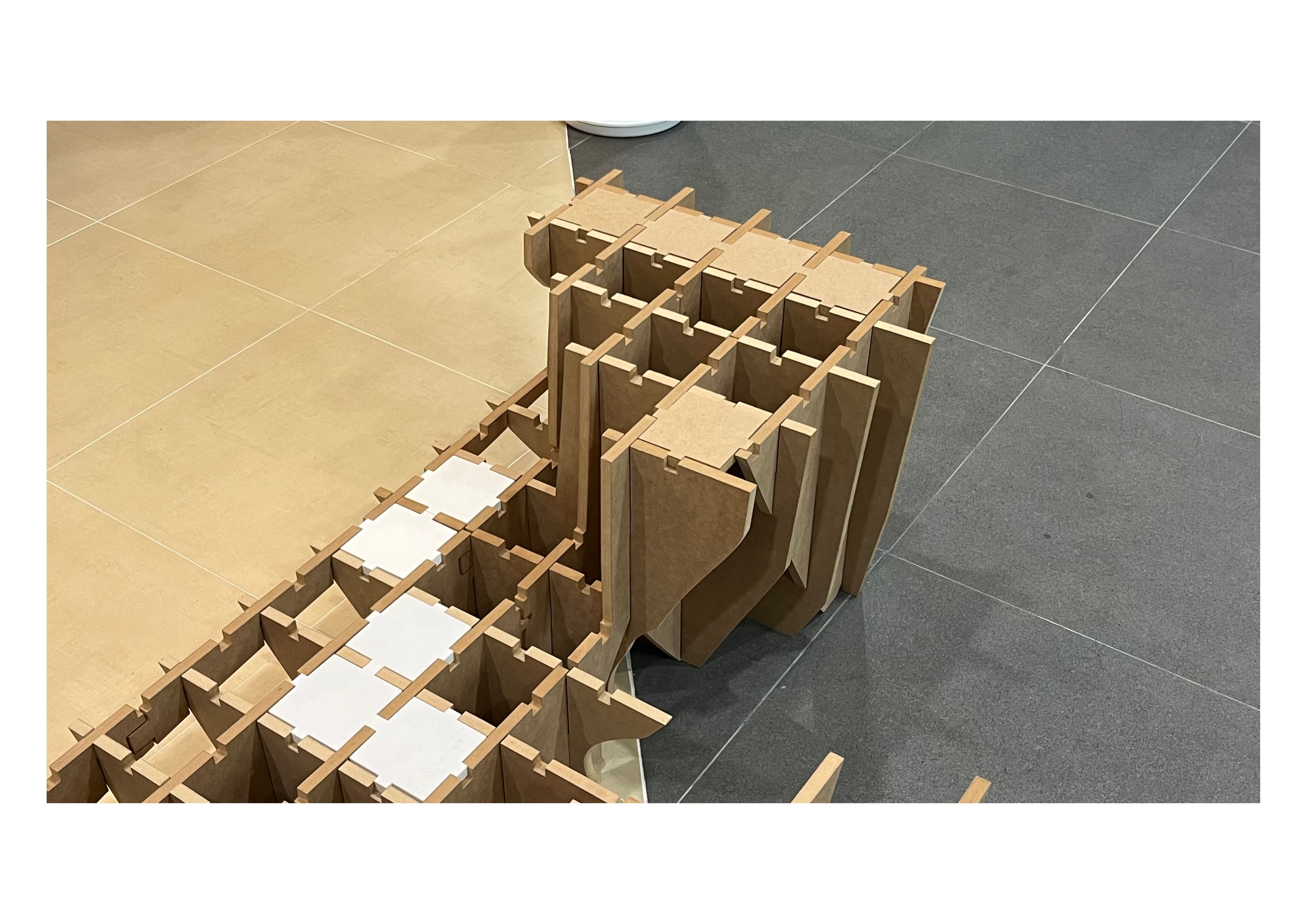
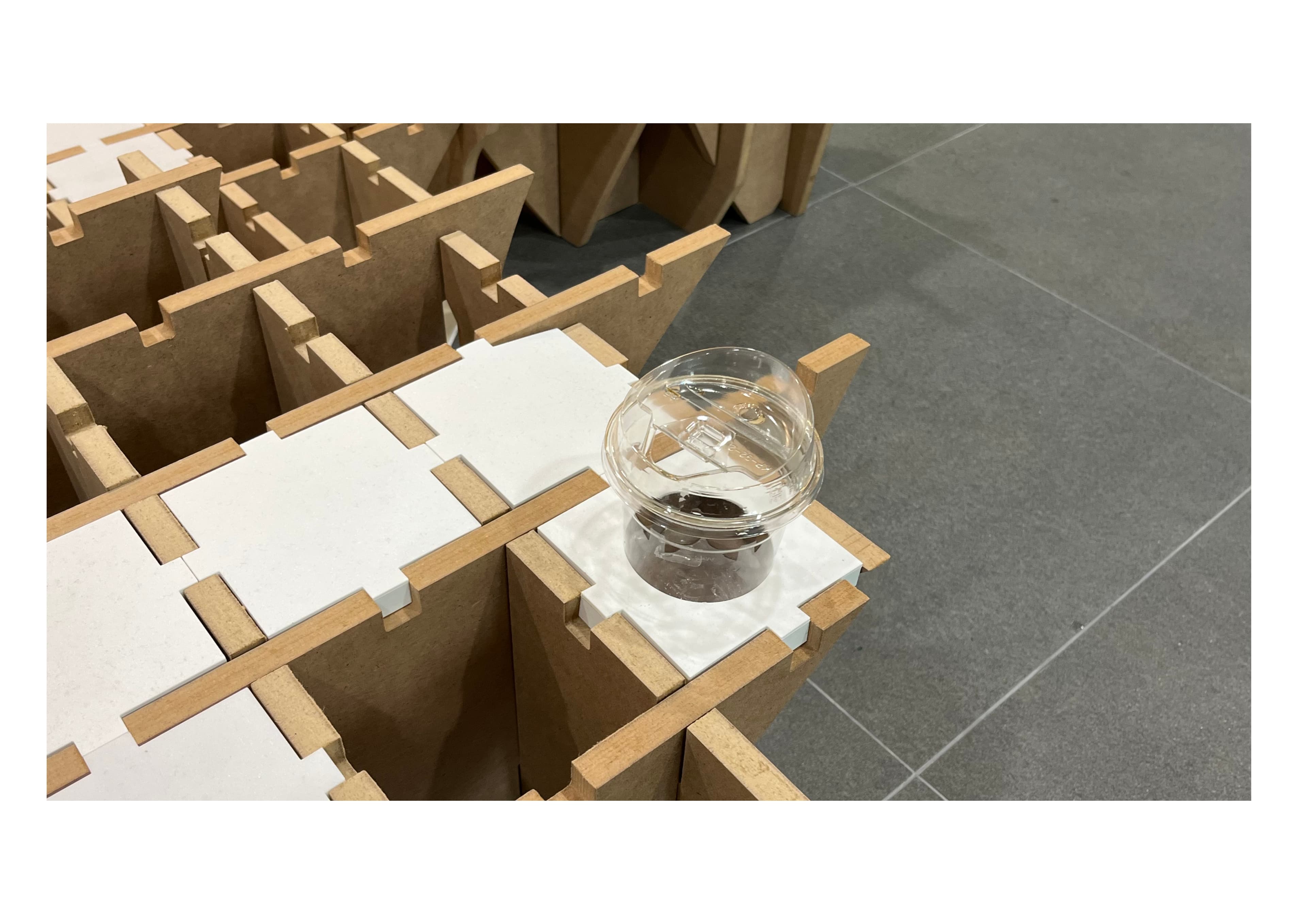
The chosen shape was converted into a waffle structure suited to CNC fabrication and assembly, and built at full scale through a series of iterative mock-ups.
Spatial Outcome
A single piece of furniture is no longer defined by one function, like a chair for sitting or a shelf for storing objects.
Depending on a user's posture and situation, different parts of it are used in different ways, and new actions emerge in a corner that was once left empty.
Object 49-1 is less an experiment in generating a particular form through algorithm than an experiment in a design process that treats human action as a condition and searches for form by comparing possibilities.